Thursday, July 2, 2009

Databases, part 2: How subscriptions work

There's nothing like the feeling one gets after digesting a six-hundred-page monster book. I just finished up Brothers by Yu Hua (which I originally recommended here), and it really is a fantastic book -- plenty of dirty humor mixed up with trenchant commentary about Chinese culture and a sort of unflinching confrontation of some of the nastier aspects of revolution. It's a big book, but doesn't read like one at all; you don't find yourself counting how many pages you have left before it's over. That's the sign of a good read.

Just thought I'd sneak that in before continuing with our topic for the week, to show that I do read the stuff I recommend and enjoy it! It's on the display table by the entrance facing the SAC for anyone who might want to pick it up.

Anyway, last week, we talked about accessing databases off-campus. Some have asked me about finding journal articles, which I've already covered here, and others became curious about databases in general after reading last week's post, so today we'll talk a little bit about how our electronic subscriptions work. These days, most of the newer non-deaf-related subscriptions coming into the Gallaudet University Library are online-only, and we're working on cutting down on our print issues, so electronic subscriptions are becoming more and more important.

The word "database" is, to use an example I've used before, a lot like the word "fruit" -- apples and oranges are two different kinds of fruit, and very roughly speaking, we have access to two different kinds of databases:
  • A publisher: We can subscribe directly to individual journals or to a group of them from a single publisher. The Journal of Deaf Studies and Deaf Education is a good example of this; it's published by the Oxford University Press, an academic publisher. They have dozens of journals, but we only actually subscribe to that one. Haworth Press is an example of the opposite -- we subscribe to 27 journals from them, including the Journal of Social Service Research and Alcoholism Treatment Quarterly, a useful resource for college students if I ever heard of one!
  • An index: ProQuest Research Library and Ebscohost Academic Search Premier are two examples of an index. They don't actually publish any journals -- they just basically collect information about them. However, a lot of times, they can strike up deals with the publishers of those journals for full-text access, which they can then turn around and provide to their subscribers. We get the vast majority of our electronic journals through indexes like ProQuest (6,761 listed journals), Ebscohost (5,924), and LexisNexis (11,029!).
One thing that's important to understand, though, is that although we do have a huge number of journal subscriptions, we don't necessarily have full-text access to all of them. Sometimes, access may be determined by the index's deal with a particular publisher. Other times, access may be determined through various kinds of subscription plans, which can boil down to:
  • Partial access: The terms for this kind of subscription varies, but our current partial-access subscriptions involve abstract-only for students and faculty, with full-text available on request. Under this plan, we get to pay for each individual full-text article downloaded, which is more cost-effective than paying for the whole shebang. We use this plan for the ScienceDirect index, for example.
  • Full-text access: ... when it's available, that is. Sometimes publishers will allow one index to provide access only to abstracts, while making the full text available to another one in order to reach as many scholars as possible. Other times, full-text access can vary even within a single journal for many different reasons, ranging from simply not having had time yet to fully digitize older issues to the publisher's deal with the index in question.
Most databases offer a range of options that fit what I've outlined here, with endless variations that I won't go into here. Our decisions about what kind of subscription to get for a particular online journal or database depend on a number of factors: Are students and faculty requesting journals from this database? Are there enough people using it? Does this database have enough potentially useful journals to justify getting a subscription at all?

With a brand-new database, we'll usually give it a shot for one year. If enough people use it, we'll try to keep it or expand access, depending on our budget constraints. If the cost can't be justified, then we won't keep it.

So what kind of costs are involved? Well ... that's another post. Next week's, in fact. We will also not be doing Questions of the Week until our little series on databases comes to a conclusion, which will occur the week of July 17th with a blockbuster post detailing the new databases we're getting for the Fall semester! There'll be explosions and stuff. I promise.

Okay. See you next week. Enjoy your July 4th weekend! Just remember: allow yourself enough time to get away before the fuse runs out.

Friday, June 26, 2009

Databases, part 1: How to get in from off-campus

I recently got a question about access to our databases, especially off-campus, so let's talk about that a little bit today.

See, every once in a while (but especially during summer and semester breaks), a student or faculty/staff member will be off campus and decide that they need an article from, let's say, the Journal of Deaf Studies and Deaf Education. They go to our Web site, library.gallaudet.edu, and click on the "ALADIN" link in the heading of the "Shortcuts to ALADIN" box.

Suddenly, they see something unexpected:
They're taken by surprise because they haven't seen this screen before, so they hit the Meebo Library chat widget on our home page, asking if they've done something wrong or if we've changed anything. The answer to both questions is "No." Generally speaking, the reason for this reaction is just that they've only ever used the Library's online resources while on campus. Off campus, though, is a different story.

There are a lot of reasons for this, which I'll explain in later posts (sorry, I'm feeling too Fridayish to get technical), but the main one is just that our contracts with the people who own our research databases require that we limit those databases to Gallaudet people only. When you're on campus, the system automatically knows you're okay because you're using a Gallaudet connection, so it lets you in seamlessly. When you're off-campus, though, the system has no idea who you are, so you have to tell it.

And that's why we have the login screen. Just enter your last name, your ID number or your Library barcode, and pick "Gallaudet" from the Institution: drop-down menu. If you don't know your ID number and don't have a Library barcode (shame on you -- get over here and ask for one), you can log on to Bison, go into "Self Service" in the sidebar on the left-hand side, click on "Personal Information," then "Personal Information Summary." You'll see your ID number on the very first line under the big blue "Personal Information" header.

Anyway, once you've logged in, you're basically as good as gold. It all proceeds just like it would if you were on campus.

Short post today, and it's basically one big Question of the Week, so we'll skip that. Also, since we're closed next Friday for Independence Day weekend, next week's post will be up on Thursday. Have a good weekend!

Friday, June 19, 2009

Meet Patrick Oberholtzer

This week, you're going to get to meet Patrick Oberholtzer. Patrick handles one of the largest -- and most varied -- groups of subject areas here in the Library, and he pulls it off extremely well. He doesn't mention it here, but he's also a big fan of American history and is definitely an outdoorsy type. He's also fairly laconic, so consider this a rare opportunity to get to know Patrick!

1) Where are you from, anyway?
I was born in Tucson, Arizona, but grew up in Whittier, California (that’s a suburb of L.A.) and Richmond, Indiana.

2) How did you get here?
Believe it or not, the first place I heard about Gallaudet was in a film I saw at Disneyland! I was working up in Ithaca, New York when I saw the advertisement in American Libraries for my job, and thought that Gallaudet would be an interesting place to work. I had already learned a little sign from a deaf person when I worked in Georgia.

3) How long have you worked here, and can you give me an idea of some of the more interesting things you've seen in your tenure at Gallaudet?
I’ve worked here for almost exactly 19 years. I think the single most interesting thing has been having the ability to make information instantaneously available! It has changed libraries and really our society—how we live. For example, we have the world’s largest collection of materials on deafness, but to see much of that material you once had to travel to the Gallaudet Library in person. Some of that information is now online and more is being added every day!

4) I don't think a lot of people know that the librarians here at Gallaudet tend to specialize in specific subjects. What are your specialties?
In a way, that is a hard question to answer because everything in the library world is constantly changing. I select books and DVDs in a variety of subjects such as Government & History, PE and Recreation, Business and Economics, Biology, and Foreign Languages. Last year I selected over 500 individual titles for the Gallaudet Library.

I guess one of my specialties is knowing what materials our library has in as many areas as possible. Why? Because the better I know the collection, the better I can help students with their research! Knowing what we have physically in the building is only part of the story. A lot of the library world is electronic – it’s online, and I have a lot of knowledge about which ALADIN databases are good for a particular subject and how to search them. I also am constantly keeping up to date with our databases and the kinds of information found in them.

In addition, I (actually all of our staff) know a lot about the history of deaf people, deaf culture and the history of Gallaudet University. I, well, again, really, we, keep educating ourselves about these topics, as students ask about them a lot.

5) What can you do for students or faculty in these fields?
Students can make an appointment with me if they need help with research. When I meet with a student, we sometimes discuss the topic, or if the instructor has provided a choice of topics, I can assist the student in choosing one—particularly if there is a deadline coming up fast and the student needs to get going.

Librarians can save students a lot of time. Sometimes a student will be really frustrated with a topic and come to see me. I’ll see the topic is a good one, but the student just needs to refine the search strategy a bit -- find the appropriate words, terms or phrases. Some databases use special vocabulary, and sometimes you have to know the right words.

An example: say you want to find cook books. You search in the ALADIN Catalog for "cook books" and you get a whole bunch of hits and a lot of them are not what you want. The word you should use is "cookery." Each of the databases are a little bit different, and knowing a bit about how they are put together and can be searched can be a big help.

At present, our Library has over 50 databases and subscribes to over 10,000 electronic journals, and that can be overwhelming and intimidating for students. I can help students navigate this and make it seem much less like a minefield.

I can help faculty by making sure the Library has materials that will support the curriculum. Sometimes faculty will send me potential research topics for a class they are going to be teaching and I’ll try to purchase books that will enhance what they are trying to accomplish. Also, I’ll consult our databases and figure out which ones are best suited for the topics covered in the class. For example, this past year I worked with a faculty member involved with the Costa Rica program. She requested some books and DVDs, and I also recommended some items, and we added all of that to the collection. We have been building the collection in African studies in a similar manner. Collaborating with faculty is a great way to help our students succeed!

6) Can you list some of the resources that you use the most in working with students and faculty? Why are they good resources to use?
I like to work with the database America: History and Life because it is really the source for finding journal articles on U.S. history topics.

I tend to use ProQuest Biology Journals for biology, JSTOR and America: History and Life for history, and LexisNexis for business stuff. They index full text, high quality journals that are great sources of information. Google, and specifically Google Scholar, are useful tools that I consult if I am having trouble identifying something or am trying to track something down.

For topics related to deafness, the Gallaudet University Library has produced two must-have databases that are found nowhere else on Earth: Index to Deaf Periodicals and Guide to Deaf Biographies. They are invaluable! I can’t imagine a student leaving Gallaudet without knowing about them. A lot of information about deaf people and the deaf community, written by deaf people, was not indexed anywhere. The Gallaudet Library stepped in years ago.

Finally, the ALADIN Catalog is such an invaluable tool! It not only tells what we have in our collection, but also the collections of the Washington Research Library Consortium (WRLC) libraries. That’s millions of books on just about every topic. You can research and find information on just about anything.

7) What do you like the most about working here?
Every day is different!

8) There's been some talk about a new library building in the works over the next few years. What's the one thing you'd most like to see included in the new facility?
Better lighting!

9) Last question, I promise: What's your favorite color?
Grey, no, blue!

... and that's Mr. Patrick Oberholtzer. One thing I found interesting about Patrick's response to the last question -- and this is why I ask -- is that blue and grey were the colors of the uniforms on both sides of the American Civil War. It's just one of those interesting connections I find between unrelated things, and is certainly fitting for such a history buff!

Okay, that about wraps it up for this week. Enjoy your (hopefully dry) weekend!

Question of the Week
My friend and I were talking about the Library's new books the other day and we realized that we didn't know what happens to old books when new ones arrive. Is there really space in the Library for all these new books?
At the moment, yes. That will change as time goes on, however. This is true for all libraries -- sometimes you just run out of space. There are a number of ways to address this, but a good temporary measure is to do what we call "weeding." This is Librarianese for "getting rid of old and/or useless books."

Every once in a while, a librarian will look at his or her part of the collection and decide it's time to do a little cleaning up. Books that are falling apart and don't contribute anything to the collection -- either because they're outdated or because there are other books on the same subject -- tend to go first, and then after that point, it can turn into a complex decision for each book, depending on its utility, general condition, and whether or not students have been using it often or recently.

We also weed according to the curriculum. For example, we don't have any graduate programs in hard sciences like chemistry, biology, or physics, which can often require that we maintain a large body of historical knowledge about the field. As such, many older books espousing outdated scientific theories or principles end up being weeded. Or whole programs disappear as the winds of change blow through Gallaudet, as in the case of the Library Science program (believe it or not!), which closed at least 20 years ago. Most of the materials related to library science have left the collection; they serve no appreciable purpose for students anymore and simply aren't checked out.

The same is true for other programs that are still around, though. For instance, I came across a book full of "duplicator masters" for teaching reading in specific subject areas. What in the world was a "duplicator"? I had no idea, but wondered why I didn't get to have one ... until I opened the book and saw what was in it: white sheets printed with thick purple stuff on the back of each sheet, alternating with brown paper. Each sheet of brown paper bore the dark-purple imprint of the white sheet in front of it, and I realized that this was for making ditto papers! I haven't seen a ditto paper in almost exactly 15 years. There were a lot of other workbooks on the shelf covering the same topic, and nobody had checked this one out since 1998. You can guess what I decided to do with that book.

On the other hand, I also found a little educational primer from 1897, full of neat lessons on American literature up until that time. 112 years out of date, yes, but now its value has become historical -- it could be useful for education, history, or English majors, and I saw it had been checked out a couple of years ago. It was also very small and thin, so it had very little impact on shelf space, so there was no reason I could find to throw it out. One of the biggest rewards of a library like Gallaudet's: the unique and occasionally very surprising things you come across deep in the stacks.

So once the decision has been made to remove a book from the collection, what happens next? The book passes out of my hands and goes to Technical Services, who have their own decisions to make about what to do with it. Once it's out of my collection, I can go back to finding new things for Gallaudet students and faculty to use, and the cycle continues.

Friday, June 12, 2009

searching for residential-school memories

My office sits right next to the shelves that hold our circulating collection of deaf school yearbooks. It always amazes me how regularly -- every day, at least -- I walk past, look at the round table between my office and the shelves, and see a pile or two of yearbooks.

This, I think, is one of the most popular parts of our collection (aside from the movies), so we'll talk about them a little bit today, as well as our deaf-related microforms.

First: Yes, we do collect yearbooks from residential schools all over the country. As part of the Deaf Collection, these yearbooks play an important role in preserving the continuity of deaf culture, so we try to get our hands on as many of them as possible.

Second: Yes, if you go to the shelves, you will likely find the year you're looking for at the school you're looking for. However, the collection isn't 100% complete for various reasons; still, if you check ALADIN for "deaf school yearbooks," you'll get lucky more often than not. If you can't find what you're looking for, there may be a copy available in our Deaf Copy 1 room -- just ask a librarian for help.

Third: Yes, this is where we keep Gallaudet's Tower Clock. The linked ALADIN Catalog page shows all the copies of all the years we own.

Fourth: No, the yearbooks are not arranged alphabetically by state. The call numbers all look like 370.97xx -- 370 for deaf schools, then .97 means "in the United States." The last two digits get even more specific, down to the region of the country and then the state. For a rough idea of how to find the state you're looking for, here's how it goes:
  • 370.974x: Northeast United States, south to New Jersey and west to Pennsylvania
  • 370.975x: Southeast United States, Delaware on down to Florida, and west to Alabama
  • 370.976x: South Central United States, Kentucky south to Alabama and west to Texas and Oklahoma
  • 370.977x: North Central United States, otherwise known as the "Great Lake States" -- Ohio west to Missouri and north through Michigan and Wisconsin
  • 370.978x: Western United States, from Kansas to New Mexico and north to Montana
  • 370.979x: The Pacific States, from Arizona in the south to Alaska in the north, and off to Hawaii in the west
The deaf school yearbooks aren't the only residential-school memorabilia in the Library, though. A significant percentage of our deaf-related microforms in the Deaf Periodicals is made up of residential school newsletters, most of which you can find by searching for "little paper family" (why this phrase? Check out our FAQ page about it). You can find these in the bright orange cabinets behind the maps, next to the Deaf Periodicals (where we also keep more recent print copies of some residential school newsletters). These microforms are excellent for research into deaf residential life and history, especially the older newsletters from before ASL and bilingualism became as accepted in deaf education as they are today.

They are all arranged alphabetically by name in the microfilm cabinets. It's easy to pull a drawer out and scan the labels of the boxes containing each reel.

We also keep copies of deaf-related dissertations published all over the country. Many are available in print and spread out among the books in the Deaf Stacks, but nearly all are also available in microfilm near the deaf school newsletters. All of this can be found in the ALADIN Catalog -- just look for a note saying "microfilm cabinet" or something similar. Many of these dissertations are also available electronically through the ALADIN database Dissertations and Theses.

As I've mentioned before, all microforms require a special reading machine to operate, three of which live on the first floor of the Library. If you're not sure how to set up a reel of microfilm, feel free to ask a librarian for help -- we're old hands!

Question of the Week
I was sitting at one of the computers on the first floor and looking up at the glass roof. It's really nice, but I was wondering why you have those cloths over them like a tent.
We're big fans of Arabian Nights. No, just kidding. Actually, there's a great reason for the sails (that's what I call them, everyone has different names for them) under the glass: shade. One of the biggest advantages of having such a nice glass roof is all the sunlight. One of the biggest disadvantages of having such a nice glass roof ... is all the sunlight. On a gorgeous day (like today! finally), it's hard to see much in all that light. I also personally suspect a bit of a greenhouse effect in operation -- all that solar radiation gets trapped in here and makes the air conditioning work harder to keep the building cool. The sails serve a very useful function and they let us enjoy some natural light here in the middle of the first floor.

Friday, June 5, 2009

New Book Cart Day!

We got some new books this week!

I'm thrilled -- it's been a couple months. Like pretty much everywhere else, Gallaudet's been affected by the economy, so we librarians had to hold off on our usual spending sprees for a month or two. It's not easy. Have you ever tried to quit smoking? I have. Take my word for it -- same feeling.

By chance or design, the first cartload this week contained mostly books that I'd ordered, with a few sprinkled in for the Deaf Collection and a few for one or two other librarians. In case you didn't know, I buy stuff for English and Popular Materials -- which usually translates to "literature" and "fun stuff," two categories that can be hard for me to differentiate for a couple of reasons: 1) I think all of it's fun, and 2) sometimes the term "literature" gets slung around pretty loosely, depending on who the author is, whether the book in question won any awards, or where the book's good reviews came from (the New York Times' Sunday Book Review, for instance, versus Cosmo, which I don't read, I swear). I also buy stuff for Fine Arts, although that was relatively thinly represented in this week's New Book Cart.

So what's in your future?

Brothers by Yu Hua
A young Chinese man, who was born on the same day his father died from a fall sustained while ogling women in the public bathroom, and his mother meet a new man and his son, and their lives, marked by their neighbors' taunting, begin to change. I was only able to skim part of the book, but I really, really liked what I saw. The book was apparently very popular in China when it was first published, in spite of its attitudes toward the Cultural Revolution and the country's slide towards capitalism.

Fledgling/Bloodchild by Octavia E. Butler
Two books by the first African-American woman to write science fiction, Fledgling and Bloodchild and Other Stories both evince the themes that Octavia Butler has become known for: race, gender, identity, and love. Fledgling tells the story of a 50-year-old vampire who looks like a 12-year-old child and her struggle to find love in a narrative that completely changes the common vampire mythos. Bloodchild is a collection of short stories that include the tales of a man who falls in love with an alien -- and is impregnated (of course); a virus that renders people unable to communicate; and the strange byproducts of hopelessness.

World War Z: An Oral History of the Zombie War by Max Brooks
The title is pretty self-explanatory -- in this book, the dead begin to walk and subsequently start a decade-long war with the living. This is the account of the entire war, as told by its survivors in interviews, tape recordings, and telephone conversations. The book doesn't play around with the concept of reanimated corpses; the walking dead are just that, shambling zombies with a taste for human flesh. It's a fascinating read, and you will never forget the Battle of Yonkers.

Confrontational Ceramics by Judith Schwartz
This beautifully-illustrated book examines the role of the artist as a social critic and the use of the medium to express subversive ideas that seek to change the passive viewer's relationship with the constructs of larger society. This is industry jargon for: "This is a book full of really interesting statues that will both entertain you and make you slightly uncomfortable, which is what the artists really wanted to do."

Curse of the Spellmans by Lisa Lutz
A family of private eyes have wacky misadventures. The parents go on vacations, the lawyer son tries to stay out of other people's business, the older daughter suspects her landscaping next-door neighbor of dastardly deeds (complete with digital recorders and restraining orders), and the 15-year-old daughter tries to set her older sister up with a cop. This is pretty fluffy fare, good for a sunny afternoon.

The Alexander Cipher by Will Adams
An archeologist, whom everyone hates, sets out on a journey to uncover the stolen body of Alexander the Great with his plucky Australian friend. It's actually a fairly good mystery and well-written, even though this is Will Adams's first novel.

Infinite Jest by David Foster Wallace
Only serious readers need apply -- this book is BIG. David Foster Wallace is one of those authors who like to play around with the conventions of novel-writing, and it shows in Infinite Jest, which tells the story of a man's family in near-future North America, which has turned into a massive corporate state subsidized by advertising. The man in question is a popular leader who dies after watching a mysterious movie, which is apparently so entertaining it causes people's brains to melt.

An Accidental Light by Elizabeth Diamond
After a twelve-year-old girl is killed in a traffic accident, things begin to change in unexpected ways for both her mother and her killer.

Angels of Destruction by Keith Donohue
Kind of a strange story about an old woman. Her daughter ran away in the 1960s to join a revolutionary group, and she spends the rest of her life alone -- until a mysterious young girl shows up on her doorstep. They both agree that the young girl will pose as the old woman's granddaughter and go to school, and everything works out ... until the old woman's sister shows up and must be persuaded that the girl is really the missing woman's daughter.

Figures in Silk by Vanora Bennett
A historical fiction novel about two daughters of a fifteenth-century silk merchant. One takes over the family business and becomes a successful silk merchant in her own right; the other becomes the mistress of the King. When the King's brother makes a grab for the throne, both sisters must make some hard choices to ensure their survival.

Why We Suck by Denis Leary
A satirical collection of cultural observations in the vein of I am America (And So Can You!) by Stephen Colbert and Are You There, Vodka? It's Me, Chelsea by Chelsea Handler, this book takes the prototypically Learyish direct approach to examining why American society takes itself so seriously when there's so much to laugh at.

So Many Ways to Sleep Badly by Mattilda Bernstein Sycamore
Consisting of a sexually ambiguous narrator's adventures in San Francisco, including his/her roach/rodent problem, yen for bikram yoga, and tendency to turn tricks through classified ads in the paper, this novel explores the modern life of American subcultures and examines the tendency toward body consciousness in the gay community.

The Fortress of Solitude by Jonathan Lethem
This novel covers three decades of life in a gentrifying Brooklyn neighborhood, starting with the first white family to move in and their trials after the mother abandons the family. The only child, Dylan, becomes friends with another motherless boy, Mingus, but their paths diverge as they grow older; Dylan becomes a music journalist, while Mingus ends up in jail, in spite of -- or perhaps because of -- everything.

So. It is a good crop this week. Next week, you'll be hearing from another librarian!

Question of the Week
I have a laptop, and I like to bring it to the Library and use the wi-fi to get my homework done with my friends. The only problem is that the big round tables on the first floor aren't anywhere near a power outlet! We have to drag the table over to a wall or a pillar so we can plug in our computers, which is hard (the tables are heavy). But we have to move it every time because the librarians keep moving them back. Can you do something about that?
Yes, indeed. Most of those tables are right next to my office, and I've walked right into a table more than once because I wasn't paying attention and assumed the table was where it's supposed to be.

The problem with moving the tables is that sometimes they end up blocking escape routes, which is not good. It also makes the building less accessible to people with mobility impairments, because there's less room for wheelchairs and crutches to navigate. Those are reasons why we keep moving the tables back to their original positions after you're done with them. We're also not crazy about plugging stuff into the walls or pillars, because it's just not safe; the power cords snake every which way, making them easy to trip over or -- if the cord is strong enough -- pulling your computer right off the table and onto the floor. Also, I've seen a student or two almost lose their pager to the bottom of someone else's foot because they tried to charge it from a wall outlet.

But fear not! Next time you're at one of those round tables on the first floor or in the basement, look under it. In most cases, you should see a power strip sticking out of the floor. That's for you. Almost all of our tables are equipped with power strips, each of which is connected to a (secure) floor outlet by a cord that's long enough to make sure that everyone at a given table is able to plug in their equipment.

Friday, May 29, 2009

In which I meditate on my favorite questions

I have to admit I'm a fan of four-day weeks. Who isn't?

Still, the short week plus the quietude that advances with the summer means there aren't many new developments to report on at the moment.

Instead, I'll regale you with some of the most common questions I get asked as your friendly neighborhood Spider-Man -- er, librarian -- and my answers for them, so you're getting a chance to see things from behind the Service Desk. The following questions are divided into two categories, so pay attention; sometimes the context is important!

On the Service Desk
"Where are the DVDs/videos/deaf school yearbooks?"
They're on the row of shelves behind you with the large sign on it that reads "DVDs"/"Videos"/"Deaf School Yearbooks."

"What about the copy machines?"
They're off to your left, just behind the little counter with the large "Photocopy" sign above it.

"Where's the eLearning Lab?"
It's downstairs; there's a large sign on the stairs right behind you that will help point the way. It's okay; we know the building's confusing, so don't feel too badly about missing all these signs. That's what we're here for!

"Do you work here?"
Frequently, yes.

"Does this building have a bathroom?"
I am very happy to say yes!

"I'm just visiting a friend in the dorms, but I lost my pager and I was wondering if I could use one of your computers to check my e-mail?"
Our computers are frequently in high demand, so our policy limits Library computer use to Gallaudet students and faculty first, followed by people performing deaf-related research. We do not allow casual visitors to use the computers. We're generally sticklers about this, so it is probably best to plan your trip well enough to avoid needing to try your luck with us.

"I left my ID at home, but I know my ID number. Can I still check out this book/DVD?"
Nope.

"Okay, how about to pay my fines/fees? Surely I don't need my ID to give you money!"
Nope. Only when you cross my palm with plastic will the way be opened.

"Well, why not?"
In a word: confidentiality. It's the law. We never, ever allow anyone to do anything affecting anyone's Library record without photographic proof of 1) their identity and 2) their current status as a registered student or employee of Gallaudet University. Some people don't take this too seriously, but it's kind of like the teller at the local bank letting just anyone walk up to her off the street and give your name so they can take money out of your account. Sounds like an exaggeration, but there have been people who let their friends borrow stuff from the Library on their IDs, only to find out the day before graduation they won't be allowed to graduate until they pay close to a hundred dollars for a lost movie that they don't remember ever checking out. That's money out of their bank account. We don't want this to happen, so we do our part to make sure the IDs we see actually belong to the people who give them to us. It's a short-term pain in the butt that'll save you a bigger one later.

"Why do lost books and movies cost so much? Harry Potter doesn't cost $97!"
We don't always collect the full $97; we usually waive some of it depending on what you decide to do. The fines break down like this:
$57 lost book fine: This number isn't arbitrary; it's the average cost of a single book across all eight schools in the WRLC. This number ensures that we're capable of replacing an item when it's lost.
$30 lost book replacement processing fee: This fee is applied because the process of removing a lost item from the collection and adding its replacement does cost money in supplies and time.
$10 overdue fine: The maximum overdue fine you can incur before the book is automatically marked as 'Lost.'
What you can do about it: One of three things: 1) pay the whole thing, in which case we'll waive the $10 and $30 fines; 2) talk to the librarian who's responsible for that book and find out what you need to do to replace it yourself, in which case we'll waive all but $10; or 3) bring the durned thing back! and you'll only pay the $10.

When you put these three options in order from cheapest to most expensive, you'll be able to see what we really want: our own stuff back. That's why that choice is the cheapest -- we don't think anyone would want to pay $57 for Hellboy 2. If the item really is lost, then we do what we can to make the loss as painless as possible for everyone.

In My Civvies (i.e., off the job)
"So, do you actually get to tell people to be quiet?"
At a university for the deaf? Things are kind of quiet for most people by default. When they aren't, we have been known to ask people to settle down, but it isn't usually an issue.

"Do you spend a lot of time putting books on the shelf?"
Nope. That's what we have student assistants for. They're also good for things like cleaning up stray books, reshelving movies, and building pyramids.

"Have you memorized the Dewey Decimal System?"
Have you memorized the periodic table? Good. Now multiply that by 10. Add maybe 300 or so.

"Aren't you supposed to know it by heart, though?"
No one person could. It's hugely complex and to commit it to memory would mean that I have no life, which we all know isn't true ... right? Right? Hello?

"How does it feel to be forced into obsolescence by the pitiless advance of modern technology?"
It feels a lot like a bunch of people asking me questions all at once. Oh, wait ...

"So you just spend all day working on the desk, answering questions?"
No, actually. Working on the desk represents a pretty slim percentage of my work schedule. The rest of the time is spent working on various projects, including talking with faculty, giving presentations, deciding what needs to be taken out of my part of the collection and what needs to be put in, meeting with students, going to lectures and workshops on campus and off with the WRLC, and a million other little things every day.

"Do you get to read books for a living?"
Not really. Sometimes I'll skim a book here and there if it's been donated and I think it could be a good addition to the collection, but actual reading material is more a byproduct of the job. A perk, if you will.

That squares away this week; no Question of the Week -- I've answered plenty as it is.

June starts on Monday, and that's when you know it's really going to be summer. If it ever stops raining, get out there and enjoy the sunlight! See you next Friday.

Friday, May 22, 2009

new and improved web site!

Jeez. Who knew that summer could be so busy? Fortunately, there's a three-day weekend coming up!

Here's something you can do over the weekend if you discover that 72 hours of unabated freedom is too much for your sanity: check out the new, improved library.gallaudet.edu!

Let me take you on a tour. Although you can certainly refer to the diagram below, I strongly suggest that you open a new window with the website in it as you read along; the diagram is just to save me the trouble of saying things like, "Now, the top box in the middle -- not the one with the pictures, the one below that, below the line where it says 'Gallaudet University Library,' I think it's called 'Research Help' or something like that, yeah ... "

Okay. Let's go.

1 - Shortcuts to ALADIN
Our most exciting new feature. You can now search ALADIN directly from our home page without having to click through to the catalog twice. Excellent for quick searches or just getting started on a long, winding research journey. We also offer a list of subject areas for our databases, so you can go straight to the Psychology databases only seconds after you hit our site. Below that are some links to our e-Journals, the e-Journals available at other Consortium schools and, of course, myALADIN.

2 - About the Library
Links to information about, of course, the Library. Hours, directions, floor maps, and staff pages are all here, as well as ... huh. There's a link to this blog in that box. Did I just feel the universe folding in on itself or have I just had too much coffee?

Probably too much coffee. I just got a new coffeemaker and I've been sucking down six cups a day. In my defense, it is of the Dunkin' Donuts brand.

Anyway, as you can see (if you're also looking at the actual web page), this section is not quite complete -- and it's not the only one that isn't. We're working on it, and you will see us tweaking the website here and there over the course of the summer as we all (including students and faculty) get used to this new setup.

Moving on:

3 - Research Help
Links to various guides and pathfinders to our collection, designed to -- hopefully -- make research easier. Our Deaf Research Help area has been reorganized a bit, but it is still the area you want to visit if you're looking for information about famous Deaf people or the statistics of deafness or, really, almost anything else you can think of. There are also links to subject-specific guides (including, eventually, LibGuides) and pages designed to help you understand and use the more commonly-used style guides when you're writing a paper, including RefWorks.

Ahh, RefWorks. That's a whole nother post, possibly sometime in the near future. Suffice it to say that if you're just not sure how to put together a citation, RefWorks is a lifesaver.

4 - Library Services
More information about our services outside of lending books and movies to Gallaudet students and faculty, as well as answers to some of the more commonly-asked questions we get about navigating our system. You can find out how to renew materials online, search for specific types of materials, or get a job at the Library. If you're a visitor, outside researcher, or in any other way not affiliated with Gallaudet University, this should be the first place you look in order to figure out where you fit in and how you can best take advantage of our services.

5 - Search Library Web
Another terrific new feature: you can now search the Library's website itself! This way, you can check to see if our website has the answer you're looking for before going to all the trouble of finding a way to contact us, especially if it's 2 in the morning and Meebo isn't rolling over when you poke it. The search box is powered by Google and also searches this blog and the Archives' website, just to cover every possible base.

6 - Chat with us!
This is the familiar Meebo chat widget you may recognize from the old website.

7 - Library News
Watch this space for new things happening around the Library and other announcements. This might be my ego talking, but it is essentially a scaled-down, formal version of this blog. If anything interesting pops up there when you visit the main Library website, head over here to see if there's any further information, which there usually will be; I'm a big fan of integration, after all.

So that's the new website. There's a lot more information available at first glance, and it might seem a little overwhelming at first -- especially considering that you're used to just a Meebo widget and a sidebar with links -- but play with it, explore a little, jab it in the ribs and see if it snaps at your fingers. You'll like it a lot more! Especially when you're in a hurry.

Question of the Week
I walked into the Library from HMB the other day and noticed the plaque about Merrill outside the door to the Library, and realized that I see lots of "Merrill Learning Center" and "MLC" and "Library," and I always thought they meant the same thing. Then I remembered that there are other things in the building, like the eLearning Lab. Is everything in the building part of the Library?
In a nutshell, not precisely. It's the other way around -- the Library is part of the building, which is occupied by Academic Technology, Library and Archives, and ASL Services (ATLAS Learning Services). The name's a bit of a mouthful (hence the very nice acronym!), because ATLAS has sort of grown together organically over the years as a group of units working together. The units are:

Academic Technology (AT): Supports classroom learning, provides technical support through the Helpdesk, offers workshops and training for students, faculty, and staff, runs Blackboard, makes videos ... a lot of stuff. Basically, if there's a piece of technology involved anywhere on campus, they're the ones to call. They're also the largest department in ATLAS, comprising four smaller subunits.

Library: Us. Obviously. Although both units work together very closely, we are distinct from the Archives because our missions are somewhat divergent. Ours is just to provide access to information, whether digital or in print. Our primary goal is to make sure the Library is capable of supporting the curriculum and meeting the needs of students, faculty, staff, and outside researchers. Few people, I think, realize that the Gallaudet University Library is a world-class research library, but it is -- and we work hard to keep it that way.

Archives: The Archives' mission is to preserve the memories of both Gallaudet itself and the deaf community in general. This includes institutional papers (like presidential memos or deaf club meeting minutes), photographs, blueprints, films, books, legal documents, machines, personal belongings, original manuscripts of deaf-related books, anything and everything. It all falls under the Archives' purview if it's deaf-related. The Archives plays a huge role in meeting researchers' needs, whether those researchers are students working on a Deaf Lit paper, faculty writing a book on Alice Cogswell, or outside researchers investigating the history of the Deaf Fraternal Order of the Upper Bronx from 1914-1934 (not real; don't look it up).

ASL Services: Short for ASL Diagnostic and Evaluation Services, this is the unit responsible for evaluating ASL proficiency in students, faculty, and staff and providing diagnostic analysis and feedback. ASL Services may be one of the most behind-the-scenes units of ATLAS; they make sure everyone can communicate with each other.

All of the above units make their home in the Merrill Learning Center; the Library is just the most visible of the four. ASL Services lives on the second floor; the Library occupies nearly all of the open space in the basement and on the first floor, plus a half-dozen classrooms and at least one auditorium; the Archives have three very large rooms to use as vaults and several smaller rooms for photography storage, genealogy research, and office space, all in the basement; and AT is all over the place, with a video archive on the second floor, offices on the first, and almost everything else in the basement -- except the Helpdesk, which is in HMB -- including the eLearning Lab and a full-on TV studio.

You'll notice that the basement houses at least some parts of three out of four ATLAS units, and those parts tend to be pretty big, like a TV studio, an auditorium, or vaults containing nearly every recoverable piece of paperwork ever generated by deaf people. It's a big place, and a big building.

It can be confusing and maze-like and nearly impossible to figure out without a decent Sherpa. Fortunately, there's a whole staff of Sherpas in the Merrill Learning Center, although here at Gallaudet, we call them "librarians." Just come to the Service Desk and ask!

Friday, May 15, 2009

What's to come

Now that the summer is beginning in earnest -- graduation is occurring right now -- let's take a look at some of the projects we've got planned for the summer and what you may see in the Library upon your arrival this coming fall.

First, new computers. We'll be getting around 5-10 newer computers to add to our current collection, and are currently in the process of deciding where to put all the new stuff; the biggest consideration is convenience for the students. The first-floor public computers by the Service Desk are very heavily used and often fill up during key parts of the semester. This is mostly because of their central location, which is also closest to the printers, main stairs, the Deaf Stacks, and the Service Desk. They also make it easy for time-crunched students to walk in, quickly find what they need, and walk out. Still, there isn't much room left in the open space on the first floor so the new computers may go downstairs. As I said, we're working on it.

The important part is that we are getting more computers! At some point over the summer, you'll be updated on what's happening with them and what you can definitely expect when you arrive in the fall.

Second, new website. We are in the process of revamping our website -- at least, we were. It's almost done! This is just the latest major change in the evolution of our online services, which has taken a fascinating path over the past few years (check it out in the Wayback Machine -- just click on the first link in each year). This newest iteration of our website is focused even more on ease of use for both students and faculty. You'll see increased emphasis on quick searches in the ALADIN Catalog and our electronic resources, on contacting us, and on helpful resources that will guide you to where you need to go. It's also very nice-looking. Do yourself a favor and explore it a little bit once it rolls out -- I'll let you know about that, too.

Third, new hours. We're currently figuring out ways to expand our operating hours for the Fall semester. Nothing concrete has yet been determined, but as soon as I find out, so will you.

Fourth, new LibGuides. Not that we had old LibGuides; this is a wholly new thing we're working on. LibGuides is a pretty cool online content management system that'll help us churn out focused guides for specific parts of our collection and specific departments here at Gallaudet University. We'll cover not only our own resources (including more direct pipelines into ALADIN for specific topics), but also provide information about citation styles, resources outside of Gallaudet, quick glossaries to help students brush up on specialized vocabulary, and many other things; most of the guides may be one-stop shops for you. Personally, I think it's a lot of fun to put together, mostly because I'm a total geek, but hopefully you'll find it useful!

These are just the four most visible changes happening in the Library over the summer. A lot of other stuff will be going on, but they're generally much more subtle than anything that will immediately impact your routine Library use.

Oh -- also, in response to swine-flu concerns and general hygiene, Gallaudet has installed free antibacterial hand-foam dispensers on both sides of the building near the Service Desk. They're lots of fun (seriously: foam), and we do encourage that everyone use them.

That just about wraps it up for this week. Good luck to the class of 2009!

Question of the Week
What's the deal with the Library hours?? Sometimes you close at 11 p.m., sometimes 8, sometimes 6, sometimes 5. Which is it?
You're not the only one who's asked about that this week. Our hours do vary on a regular basis. For instance, this summer, we close at 8 p.m. Monday-Thursday and at 5 p.m. Friday-Sunday. You can sleep in all weekend, too: we don't open until 1 on Saturday and Sunday. This is a change from this past Spring semester, when we were open until 11 p.m. Sunday-Thursday.

We do change our hours based on how we see people using the Library, though; for instance, during Fall and Spring semesters, we're friendlier to night-owls and procrastinators: we are generally open later at night and for more of the day on the weekends, which will be true again this coming fall. Still, as I mentioned in New Thing Three above, we're still working on figuring out exact hours, so hang in there!

Between semesters, when classes aren't in session at all (like this week or around Christmas), we're only open from 8 a.m. - 5 p.m. Monday-Friday. Period.

Also, if Gallaudet University is celebrating a holiday, we usually are, too, and will be closed.

Hopefully that clears up the confusion. Our hours are always posted at the building entrances, and we also have loads of copies of our hours available in the rack by the photocopy center -- just ask at the Service Desk if you're not sure where they are -- or check at our website.

Friday, May 8, 2009

Summer reading happiness

Since it's the last week of the semester and finals are essentially over, I'll be loosening up a little bit today. I'm guessing most of you are pretty sick of the Library by now, judging from the sheer number of people we saw this week, so no Question of the Week.

Instead, I've gone around the first floor and asked everyone for their favorite books for summer reading. Some consist of pretty light fare, while others are bona fide reading projects. Still, all are good reads; we spend all our professional time around books, so you know we've got at least some taste!

Diana Gates
Talk Talk - After being falsely arrested for several crimes, a deaf woman and her boyfriend set out to find the real perpetrator.

Mischief - One of Ed McBain's 87th Precinct books, this story sees the return of The Deaf Man, a mysterious criminal, with cryptic clues sent to the police department that hint at his upcoming nefarious plans. This book also covers several subplots including pro-life and pro-choice activism, graffiti, a series of Alzheimer's patients found on the streets, and a hostage crisis.

Congo - One of Michael Crichton's earliest books, this novel has a research team (accompanied by Amy, a gorilla who signs) investigating horrific attacks perpetrated by gorillas deep in the African jungle. Although the technology is dated (this book was written in 1980), the story is tense and superbly-written.

Jephte's Daughter - A young Jewish woman is married to an orthodox Talmudic scholar, but when their marriage becomes abusive, she escapes to London with their son and falls in love with a priest. (Available at George Washington University through CLS)

Laura Jacobi
The Great Man - With the death of a famous artist comes a whole passel of revelations about the man himself, his wife, his mistress, and his sister.

The Corrections - The story of an emotionally complicated family -- a sick father, a mother obsessed with Christmas, a successful chef daughter with romantic issues, and two sons, one of whom is a depressed banker and the other an insecure gadfly -- written with a comic voice and with an eye to cultural commentary.

Seven Pillars of Wisdom - Learn about the real Lawrence of Arabia from the man himself, and how he helped unify the Arabs against Turkish oppression in the Middle East after World War I.

Lonesome Dove - A group of cowboys go on a cattle drive, but this novel is so much more than that. Read this if you're into fascinating characterization and exploring relationships between people set in the beauty of the American West.

James McCarthy
Duma Key - Stephen King offers up a story much closer to the quality of his earlier work, about a one-armed man who develops a profoundly disturbing talent while in seclusion on an island just off of Sarasota, Florida.

The Known World - A black-owned slave plantation before the Civil War spins out of control following the death of its owner.

Wicked - A very unusual take on the Land of Oz, this book takes you through the life of Elphaba, the green-skinned Wicked Witch of the West, and creates a very solid universe full of strange superstitions, political activism, and the problems of totalitarian government.

The Death and Life of Great American Cities - Although this book was written a few decades ago, its insights about cities and the nature of the urban environment are fascinating, especially in light of recent trends toward office "superblocks" in urban downtowns.

Patrick Oberholtzer
Great Plains - Learn about the Big Sky and how its colorful past blends into its present through an engaging commentary by Ian Frazier.

Manhunt - A young man with prospects for fame and fortune threw it all away because he was on the losing side of a war. This is the story of John Wilkes Booth, the man who assassinated Abraham Lincoln, and his capture.

Native Tongue - One of the best comic authors to come out of South Florida, Carl Hiaasen spins a tale of murder and nutty environmentalists, investigated by a PR writer for a quintessentially cheesy theme park.

A Walk in the Woods - The Appalachian Trail is an epic path across the eastern United States through some of the most beautiful wilderness on this continent. Bill Bryson somehow combines hilarity and a sense of the majesty of these woods in his story of hiking the Trail.

Jane Rutherford
Harry Potter and the Half-Blood Prince - Are YOU ready for the movie? Because we sure are!

My Sister's Keeper - The gripping tale of a young woman who was born as a transplant donor for her leukemia-stricken older sister, this novel explores questions about identity, selfhood, family, and love.

The Time Traveler's Wife - A young librarian and his wife must come to terms with his unusual condition -- involuntary time-travel -- and its effect on their past and their future.

Angels and Demons - In an earlier novel from the author of The Da Vinci Code, Robert Langdon must hunt down a secret society bent on destroying the Catholic Church -- and possibly a good chunk of the world besides.

Good grief. After looking through some of my colleagues' recommendations, my summer reading list just got a lot longer. I hope yours did, too!

Next week, we'll talk a little bit about some of the changes you may see in the Library when you return for the Fall semester -- unless you're graduating, in which case, you'll have to come visit us sometime!

Friday, May 1, 2009

Panels and balloons: Graphic novels

BAM! BIFF! POW! ZAP!

The little sound effects above are what sometimes come to mind when people think of comic books: funny little drawings full of silly things.

The truth is, they are so much more than that. Before I start to explain what more there is to comics than the unadulterated joy of onomatopoeia, though, there's an important distinction to be made.

There are comic books, and then there are graphic novels. Superficially, there isn't much of a difference between the two. They both tell stories using images and text in linear sequences to portray events. In both, people's words are framed in speech balloons and, yes, sound effects may appear in funny-looking fonts.

Practically speaking, though, there's a big difference. While comic books are sort of like magazines, published on a regular schedule, they're usually fairly short (no more than a couple dozen pages), episodic in nature (they tell short stories that might fit into a bigger story, told over multiple issues), and bound cheaply with staples.

On the other hand, graphic novels are hybrids of comic books and regular books. They use the comic-book format to tell book-length stories. Sometimes they accomplish this as collections of comic books that have been issued over a period of months, then collected and bound into a single graphic novel. More often, they stand on their own as unique narratives that are executed in very creative fashions. These stories run the same gamut of fiction and non-fiction you see on our usual shelves; they aren't limited to superheroes.

Graphic novels have become pretty popular for libraries for this reason. The visual format can be incredibly appealing if done by a talented artist -- often, you will find a graphic novel that has almost no dialogue in it because the drawings tell the entire story on their own. They've also been mildly controversial at one point or another as people discover more and more that there are comic books in the library, and think the library should be spending that money on "real" books instead.

If you feel that way, bear in mind that Gallaudet is by no means the only library in the Consortium acquiring materials like this. Schools like Georgetown University, Catholic University, and American University are all acquiring graphic novels at a furious clip. Other schools like Duke University are not only acquiring graphic novels, but also using the format in new and fascinating ways.

All matters of opinion aside, though, the Library has a few graphic novels, although that number is slowly growing. Our offerings range from visual adaptations of text-based novels to totally original works (i.e., stories that exist only in graphic-novel form), passing through what are known as "spandex comics" -- collections of superhero comics (we have X-Men, for example). Here's a list of the highlights of our collection, with short summaries and links to their permanent records in ALADIN. The titles with a star (*) are also on display in the Library, in front of the West entrance (toward Peet Hall).
  • Discworld Graphic Novels*
    • The two very first Discworld novels by Terry Pratchett are adapted into graphic-novel form. Terrific if you're into humorous fantasy with a dash of scathing social satire.
  • Stuff of Life*
    • This is a great example of how the graphic-novel format isn't used only for fiction -- Stuff of Life is a visual guide to the workings of DNA and genetics.
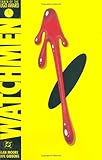
  • Watchmen
    • Considered the precursor of our current boom in the graphic-novel format, Watchmen explores an alternate timeline where Nixon never stops being President and, instead of superheroes, ordinary people dress up in funny costumes. Sounds simple, but the book uses the basic premise to examine issues like vigilantism, government control, and the sanctity of human life. Dark, violent, and twisted, this isn't your 12-year-old brother's rag.
  • Maus I & II
    • Maus has been mentioned on this blog before; it is widely considered one of the best visual portrayals of the horrors of World War II and the life of a Jewish family during the Holocaust.
  • Persepolis; Persepolis 2*
    • Marjane Satrapi, an Iranian woman who left Iran as a young girl after the fall of the Shah, tells her life story in a style that is both winsome and stark.
  • Prince of Persia*
    • Based on the video game, this book tells the story of a young prince, his siblings, and a prophecy in the desert that would change everything.
  • Sandman* (currently Vols. 1-4)
    • Possibly one of the most popular graphic-novel series of all time, the Sandman books by Neil Gaiman (this year's Newbery Award winner for The Graveyard Book) are tough to describe without sounding pretty silly. They chronicle the life of Morpheus, the god of dreams, and incorporate a vast cast of characters that are, at the same time, mythical, imaginary, and based in reality.
  • The Cartoon History of the Modern World: Part I: From Columbus to the U.S. Constitution
    • This is basically a history-book-length graphic novel that tells the history of what is generally considered the "modern world," starting from the 15th-century discovery of the New World, in a narrative format. It's one of several graphic novels in the same vein, covering the histories of the Universe and American foreign policy, among other things.
  • The Hobbit*
    • This is an adaptation of JRR Tolkien's classic novel, a sort of prequel to the Lord of the Rings epic.
  • Manga Shakespeare*
  • Graphic Forensic Science*
    • This series of graphic novels covers important aspects of forensic investigation, including autopsies and corpses.
  • Emma*
    • A manga adaptation of the classic Austen novel, Emma.
  • Mom's Cancer*
    • The story of an artist son and his cancer-suffering mother -- at times humorous, at times touching, at all times very well-done -- this book provides an honest perspective on the effect of serious illness on a family.
  • Road to Perdition*
    • This is the classic Depression-era gangster mystery graphic novel on which the Tom Hanks movie was based.
  • Understanding Comics: The Invisible Art
    • This is one of the foremost discussions of the format currently in existence. Scott McCloud, author of Zot!, uses his recognizable, appealing style to portray all the different elements that go into a comic book, including panel shape and placement, text, and how to progress action in order to play with the reader's sense of time. This book is absolutely essential to understanding how graphic novels work!
The graphic novels in the list above are by no means the only ones we have. They're always worth checking out. Many of these books can be found in the vicinity of call number 741.5 in the General Stacks downstairs, although a lot of the more subject-specific stuff (like Stuff of Life or Graphic Forensic Science) are located with their subjects. In general, our graphic novels are spread fairly thinly throughout the Library but are at their greatest density in 741.5.

That will just about do away with this week. Next week, we'll offer up some recommendations for good summer reading!

Question of the Week
I'm trying to find a videotape or DVD that has something to do with ASL and treasures. How do I search for treasures without bringing up a bunch of books about pirates?
That's a very good question, and it's one that also applies to this week's post about graphic novels. What you're really asking is: How do I search for something in a specific format?

First, a word about Librarianese. Sometimes librarians use words that don't necessarily mean exactly what you've always understood them to mean or actually mean them in more specific ways than you're used to (like "record") -- I call that "Librarianese." The word format is an example of Librarianese; we use the word to refer to what the the thing actually is and how it conveys the information it contains. "Book" is a format; so is "VHS" and even, in some special libraries, "sculpture" or "painting."

The Library collection encompasses several different formats: books, periodicals, videorecordings (both VHS and DVD), microforms (both microfilm and microfiche), electronic (available through the Internet, like our impressive list of e-book offerings), and media (CD-ROMs, games, and other stuff that can't be classified as any of the other formats). If the item you want isn't a book, you can usually see the format in brackets in the link to the item, like this:

So what do you do when you don't want a book? There's a way to search in ALADIN that will help. It's called "Keyword (AND, OR, NOT)." You'll find it in the "By:" field when you're searching in ALADIN. When you select that, you can search for more than one thing at the same time, using AND, OR, or NOT between the keywords you use. Here's how each works:
  • AND: Requires that all the results use the words on both sides of "AND" (like "tropic thunder" AND videorecording if you want to find the movie)
  • OR: At least ONE of the words on either side of "OR" is acceptable (like "tropic thunder" AND (videorecording OR media) if you know you want something called Tropic Thunder, but you're not sure if it's listed as a videorecording)
  • NOT: Requires that the next word after "NOT" isn't included in the search (like "tropic thunder" NOT microform if you're curious about whether or not there are any other relevant items in the collection that doesn't require fiddling with a microform reader)
I'm not going to go into the full complexities of searching with this method -- because it can be complex -- but if you know the word for the kind of thing you want, you can use this search strategy with that word and the topic you're looking for and find what you need much more easily.

Terms that may work include the list I gave you above, as well as things like "dictionary," "picture book," annnnnd ... "graphic novel"! Bet you were wondering what all this had to do with Watchmen.